
Call: +919826033365 07971891384( PIN:867)
 Send Inquiry
 Send Inquiry
4 Wheel Intensive Care Ventilator
Price 850000 INR/ Piece
MOQ : 1 Piece
4 Wheel Intensive Care Ventilator Specification
- Height
- 1450 mm
- Properties
- User Friendly and Easy Operational
- Function
- Respiratory Support, Monitoring
- Dimension (L*W*H)
- 750 x 550 x 1450 mm
- Phase
- Single Phase
- Treatment Type
- Invasive/Non-Invasive Ventilation
- Frequency
- 50/60 Hz
- Material
- Metal
- Product Type
- 4 Wheel Intensive Care Ventilator
- Storage Capacity
- Event Log up to 5000 records
- Automation Grade
- Automatic
- Accuracy
- High Precision Sensors for O2/Flow
- Display Type
- Digital/Graphical
- Color Code
- White with Blue Accents
- Use
- Assisted and Controlled Mechanical Ventilation
- Application
- Hospital etc.
- Humidity Range
- Relative: 5% - 95%
- Shape
- Rectangular with Integrated Wheels
- Weight
- 53 kg
- Temperature Range
- Operating: 10C to 40C
- Power
- 220-240V AC, 50 Hz
- Suitable For
- Medical
- Power Source
- Mains + Rechargeable Battery
- Display
- 7-inch Color TFT LCD Touchscreen
- Voltage
- 220-240 V
- Waveforms Displayed
- Pressure, Volume, Flow
- Noise Level
- < 55 dB(A)
- Tidal Volume Range
- 50-1500 ml
- Maximum Patient Weight
- 130 kg
- PEEP Range
- 0-20 cmH2O
- Modes
- SIMV, CMV, CPAP, SIGH, Assist/Control
- Connectivity
- USB, Ethernet
- Software Update
- Via USB Port
- Mobility
- Four 360 Rotating Wheels with Lock
- Alarm System
- Visual and Audible Alarm for Apnea, High/Low Pressure, Power Failure, etc.
- Battery Backup
- Up to 2 hours
- Oxygen Concentration Range
- 21%-100%
- Nebulizer Function
- Available
4 Wheel Intensive Care Ventilator Trade Information
- Minimum Order Quantity
- 1 Piece
- Payment Terms
- Cash Advance (CA)
- Supply Ability
- 5000 Pieces Per Week
- Delivery Time
- 2-7 Days
- Main Domestic Market
- All India
About 4 Wheel Intensive Care Ventilator
As a quality-oriented company, we are focused to provide 4 Wheel Intensive Care Ventilator. This ventilator is designed for use by trained medical professionals in intensive care units. Its compact interface and big screen give you better operating experience. Apart from that, 4 Wheel Intensive Care Ventilator comes with flexible configurations to suit your needs.
Comprehensive Ventilation Modes
This ventilator supports several critical care modes such as SIMV, CMV, CPAP, SIGH, and Assist/Control. Each mode enables clinicians to tailor respiratory support to patient-specific demands, making it suitable for a broad range of intensive care scenarios from acute respiratory distress to routine ventilation.
Reliable Mobility and Robust Construction
Equipped with four 360 rotating wheels and sturdy metal construction, the ventilator ensures effortless movement within medical facilities while maintaining exceptional stability. Whether relocating between departments or maneuvering around equipment, its design offers both convenience and security.
Advanced Safety and Monitoring Features
Integrated with high-precision sensors, this ventilator provides continuous monitoring of oxygen, flow, and vital parameters. The audible and visual alarms for apnea, power loss, and abnormal pressures ensure prompt user response, prioritizing patient safety at all times.
FAQ's of 4 Wheel Intensive Care Ventilator:
Q: How do I switch between different ventilation modes on this ventilator?
A: Switching between ventilation modes such as SIMV, CMV, CPAP, SIGH, and Assist/Control is seamless via the 7-inch color TFT LCD touchscreen. The user-friendly interface allows clinicians to select desired modes, adjust settings, and view real-time waveforms and patient data with minimal effort.Q: What benefits does the ventilator's mobility offer in a hospital environment?
A: With four 360 rotating wheels and a secure locking mechanism, the ventilator offers excellent mobility, allowing healthcare professionals to easily transport it between patient rooms or departments. This ensures prompt and flexible support for critically ill patients wherever needed.Q: When should the built-in alarm system be expected to activate?
A: The ventilator's alarm system is designed to provide both visual and audible alerts in key situations, including detection of apnea, high or low airway pressure, power failures, or abnormal mechanical function. Prompt alarms help staff respond quickly to changes in patient status or technical issues.Q: Where can the ventilator's event logs be accessed and for how many records?
A: Event logs for up to 5,000 records can be accessed directly via the device's digital touchscreen interface. This feature allows clinicians to review prior events, alarms, and system actions for thorough analysis and quality assurance.Q: What is the process for updating the ventilator's software?
A: Software updates are conveniently completed via the USB port. Connect a compatible USB storage device with the update file, follow on-screen prompts, and the ventilator will guide you through the update process, ensuring the system operates with the latest enhancements and security features.Q: How does the ventilator ensure precise oxygen concentration delivery?
A: Utilizing high-precision sensors, the ventilator delivers and monitors oxygen concentrations ranging from 21% to 100%. This accuracy supports individualized therapy for diverse patient needs and maintains optimal respiratory support throughout treatment.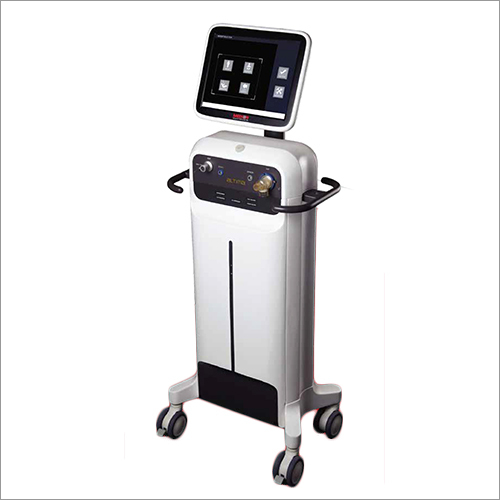
Tell us about your requirement

Price:
Quantity
Select Unit
- 50
- 100
- 200
- 250
- 500
- 1000+
Additional detail
Mobile number
Email


Contact Details
DNHS HEALTHCARE DEVICES PRIVATE LIMITED
GST : 23AAHCD5042K1ZR
- Unit-77/1, Sanwer Road, Near Central Warehouse Narwal, Kumar Khadi,Indore - 452015, Madhya Pradesh, India
- Phone :+917971891384 PIN:( 867 )

 Send Inquiry
Developed and Managed by Infocom Network Private Limited.
